
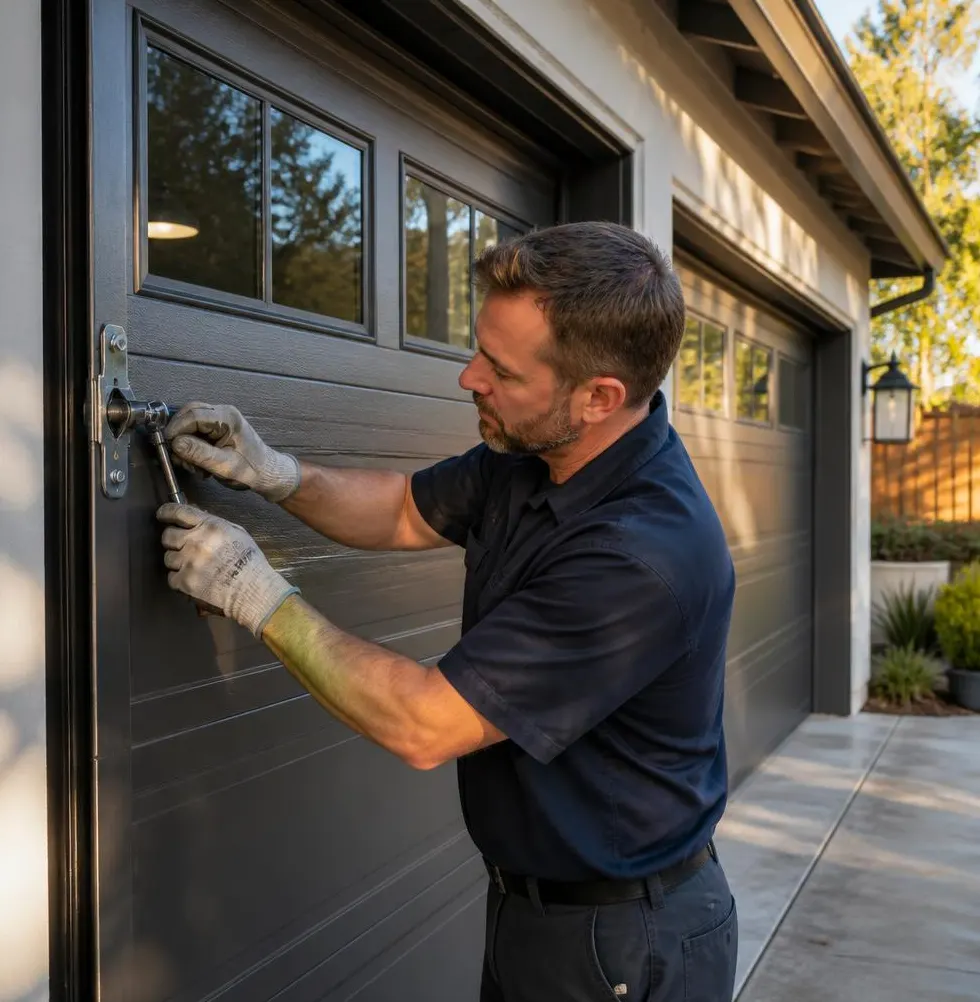
What Waiting Until Spring Actually Costs You
Put off a worn garage door spring through another Hampton Roads winter and you're not just risking an inconvenient morning. You're risking a door that slams shut without warning, a spring that snaps under tension and turns into a projectile, or an opener motor that burns out trying to lift a door with no spring support left. None of that gets cheaper or safer by waiting. Icy mornings and sudden cold snaps put extra strain on metal that's already fatigued, and a spring that's been creaking along since summer humidity started it rusting is not going to get stronger sitting in the cold.
What a Spring Is Actually Doing
Garage door springs do the heavy lifting, literally. A torsion spring (mounted horizontally above the door) or a pair of extension springs (running along the upper tracks) store enough mechanical energy to counterbalance a door that can weigh well over 100 pounds. That stored energy has to go somewhere when the spring breaks, and it goes fast. This isn't like a worn-out hinge that just gets noisy. It's a loaded piece of steel under hundreds of pounds of tension.
How People Actually Get Hurt
This is where DIY spring replacement earns its reputation as one of the few home repair jobs that sends people to the emergency room with real regularity. The injuries aren't exotic, they're mechanical and predictable:
- Sudden release of tension. Loosening the winding cone on a torsion spring without the correct winding bars can cause the spring to unwind violently, striking hands, arms, or the face.
- Snapped cables under load. If a cable is still attached when a spring lets go, it can whip with enough force to cause deep lacerations.
- Door drop. A door that's only partially supported by a spring can fall suddenly while someone has hands or fingers near the tracks or opener arm.
- Crush injuries. Fingers and hands get caught between coils, brackets, and the track during improvised adjustments, especially on older torsion systems that weren't built with modern safety features.
The severity ranges from bad bruising to broken bones, deep cuts requiring stitches, and eye injuries from flying metal fragments. These aren't rare freak accidents, they're the direct result of how much force a wound spring holds and how little margin for error there is when something lets go.
Signs Your Spring Is Already Telling You Something
You don't need to guess. A spring nearing failure usually gives warnings:
- The door feels noticeably heavier when you lift it manually, or the opener strains and makes a louder motor noise than usual.
- You see a visible gap in the coils of a torsion spring, or notice rust concentrated at one section.
- The door is uneven when it opens, one side higher than the other, which often points to an extension spring that's stretched or a cable starting to fray.
- You hear a loud bang from the garage, that's often a torsion spring breaking on its own, not from any repair attempt.
In this climate, humid summers accelerate rust on exposed coils, and the freeze-thaw swings of a Hampton Roads winter make already-weakened metal more likely to fail abruptly rather than gradually. Older homes in the area with original torsion hardware are particularly worth a look before the cold really sets in.
What You Can Safely Do Yourself
Spring replacement itself isn't a homeowner task, but there's real maintenance that is, and doing it well reduces how often springs fail early in the first place:
- Visual inspection only. Look for rust, gaps in coils, or uneven door position. Don't touch winding cones, set screws, or try to adjust tension.
- Lubricate the right parts. A silicone-based garage door lubricant on rollers, hinges, and the spring itself (not grease, which attracts grit) reduces friction and rust buildup, especially valuable after a stretch of heavy rain or salty coastal air.
- Test the balance safely. With the opener disconnected, lift the door manually about halfway. It should stay in place. If it drops or shoots up, the spring tension is off, and that's a signal to call for service, not to grab wrenches.
- Check cables and pulleys visually. Fraying strands or a cable sitting off its pulley are signs the whole system is under stress. Note it, don't touch it.
- Keep the area clear. Simple but overlooked: never stand directly under a door that's being worked on, tested, or showing signs of imbalance.
The line is simple: anything that involves touching the spring itself, the winding cones, or the cables under tension is professional work, full stop. The tools required (properly sized winding bars, vice grips to lock the track, the right torsion spring rated for your door's weight and size) aren't things most garage toolboxes have, and using the wrong ones is exactly how injuries happen.
When to Call Yorktown Garage Door
If your door feels heavy, sounds different, sits unevenly, or you've spotted rust or gaps in the spring coils, that's the point to call rather than inspect further yourself. Our Spring Replacement service uses properly rated torsion and extension springs matched to your door's weight, and we handle the winding and tensioning with the right equipment, not guesswork. We also offer Garage Door Maintenance visits that catch early rust, cable wear, and balance issues before they become a broken spring on a cold morning.
If your garage door is giving you any of these warning signs, don't wait for it to get worse over the winter. Call Yorktown Garage Door and get it checked out properly, before it becomes an emergency room story instead of a routine repair.