
The Moment You Notice It
It usually happens during a bad blow off the water. You're standing in the garage, maybe grabbing something from the shelf, and the wind gusts outside. The door bows inward, just slightly, then snaps back with a dull boom. Or you see daylight flicker along the bottom seal as the panel flexes. Maybe it's just a rattle in the track that wasn't there last spring. Whatever the sign, it's the same message: your garage door just took a hit it wasn't built to handle, and it's going to happen again before winter is over.
Hampton Roads falls and winters bring exactly the kind of weather that finds those weaknesses — coastal storms, sustained wind events, heavy driving rain, and the occasional ice storm that locks everything up tight right when you need the door to work.
Why the Garage Door Is the Weakest Wall in the House
Every other wall in your home is a rigid, continuous surface tied into the framing. The garage door is the opposite: a large, hinged panel made of several sections, held in place mostly by its track, rollers, and the force of its springs. When wind hits the front of a house, pressure builds against that door differently than against a solid wall. If the door isn't properly reinforced or doesn't fit tightly in its track, that pressure can flex the panels, pop rollers out of the track, or in a bad enough event, push the whole door off its guides.
This matters more in a region with a real mix of older and newer housing. Older garage doors, especially ones installed before wind-load standards became common, often have lighter-gauge panels and tracks that were adequate for their time but weren't engineered for sustained gusts. Newer homes may have better doors but can still suffer if the opener, weatherstripping, or hardware hasn't been maintained.
What to Check Before Storm Season Peaks
Track and Rollers
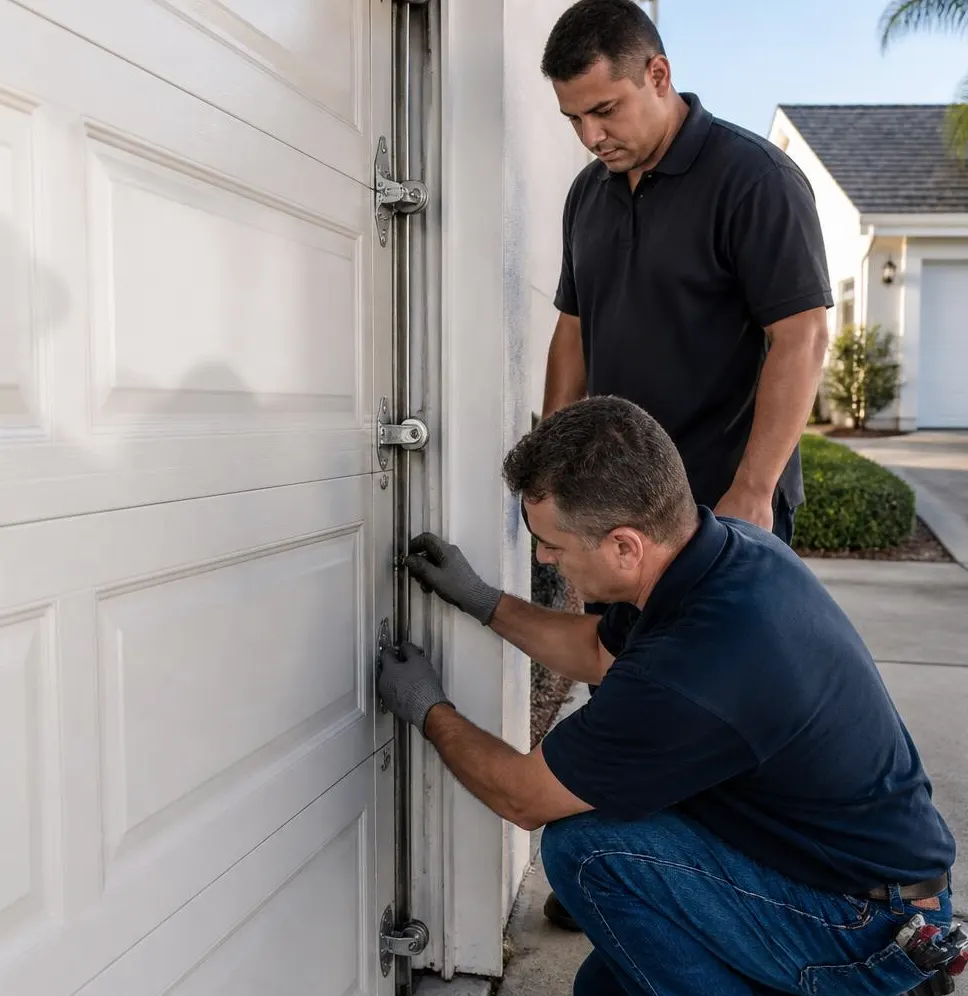
Stand inside the garage with the door closed and look along both tracks. They should be straight, tightly bolted to the framing, and free of rust or bent sections. Loose track brackets are one of the most common reasons a door comes off its rails in high wind — the track itself doesn't have to fail, just the bolts holding it to the wall.
Panels and Seams
Look for daylight between panel seams, warping, or soft spots (common on older wood or poorly maintained steel doors exposed to humidity). A panel that's already slightly bowed has far less resistance left before a strong gust pushes it further.
Weatherstripping and Bottom Seal
The rubber seal along the bottom and sides does more than keep out rain. A worn or missing seal lets wind-driven water into the garage during a nor'easter, which can damage stored belongings, rust the bottom of steel panels, and soften wood doors from the inside out. Replacing seals is inexpensive and worth doing every couple of years regardless of storm season.
Springs and Cables
Springs under tension already carry a lot of load. A door with a weak or mismatched spring works harder every time wind pressure adds resistance, which shortens its life and increases the odds of a sudden break, often during the exact moment you're trying to close the door before a storm hits.
Opener and Backup Power
Coastal storms bring power outages. If your opener has no battery backup, you're stuck manually operating a heavy door in bad weather, which is both inconvenient and riskier if the door is already stressed from wind. A battery backup unit keeps the opener working through short outages and avoids the awkward, sometimes dangerous process of disengaging the trolley and lifting the door by hand.
Reinforcement Options Worth Knowing About
If your inspection turns up a door that's structurally sound but on the lighter side, there are a few paths, each with trade-offs:
- Horizontal retrofit struts bolted to the inside of each panel add rigidity without replacing the door. This is the lower-cost option, generally in the low hundreds of dollars for materials and labor, and works well for doors that are otherwise in good shape.
- Reinforced track and bracket upgrades address the connection point that most often fails first, which matters more than panel strength in many real-world wind events.
- Full replacement with a wind-rated door makes sense for older doors nearing the end of their service life anyway. These doors use heavier gauge steel and reinforced end stiles, and pricing nationally runs from roughly $1,000 to $3,500+ depending on size, material, and insulation — a bigger upfront cost but one that pairs well with a home's overall storm readiness.
The right choice depends on the door's age, how it's held up so far, and whether you're planning to replace it in the next few years anyway. Reinforcing a door you'll replace soon rarely makes sense; reinforcing a solid door that just needs backup strength usually does.
When to Call Yorktown Garage Door
If you've noticed panel flex, a door that shudders in gusts, rust along the bottom seal, or an opener with no battery backup, it's worth having it looked at before the next storm rolls in, not after. Yorktown Garage Door handles both garage door maintenance and spring replacement, and can tell you on the spot whether your door needs reinforcement, a full track realignment, or just fresh weatherstripping and a tune-up. We'll check the hardware that actually fails first in wind events, not just the parts that are easy to see.
If you're in Yorktown, Newport News, Hampton, Williamsburg, or anywhere else in the Hampton Roads area and want your garage door storm-ready before the next coastal system comes through, call Yorktown Garage Door today and get it checked out.